November 20, 2026 by Stonewave team
You’ve built a website, added content, optimized its meta tags, and made sure it is indexed by Google. So, what’s next?
Are these steps enough to make your website successful?
Not necessarily. A successful website needs more than an attractive design and a place in search engine results. It should attract the right audience, provide a positive user experience, and, most importantly, help you achieve your business goals.
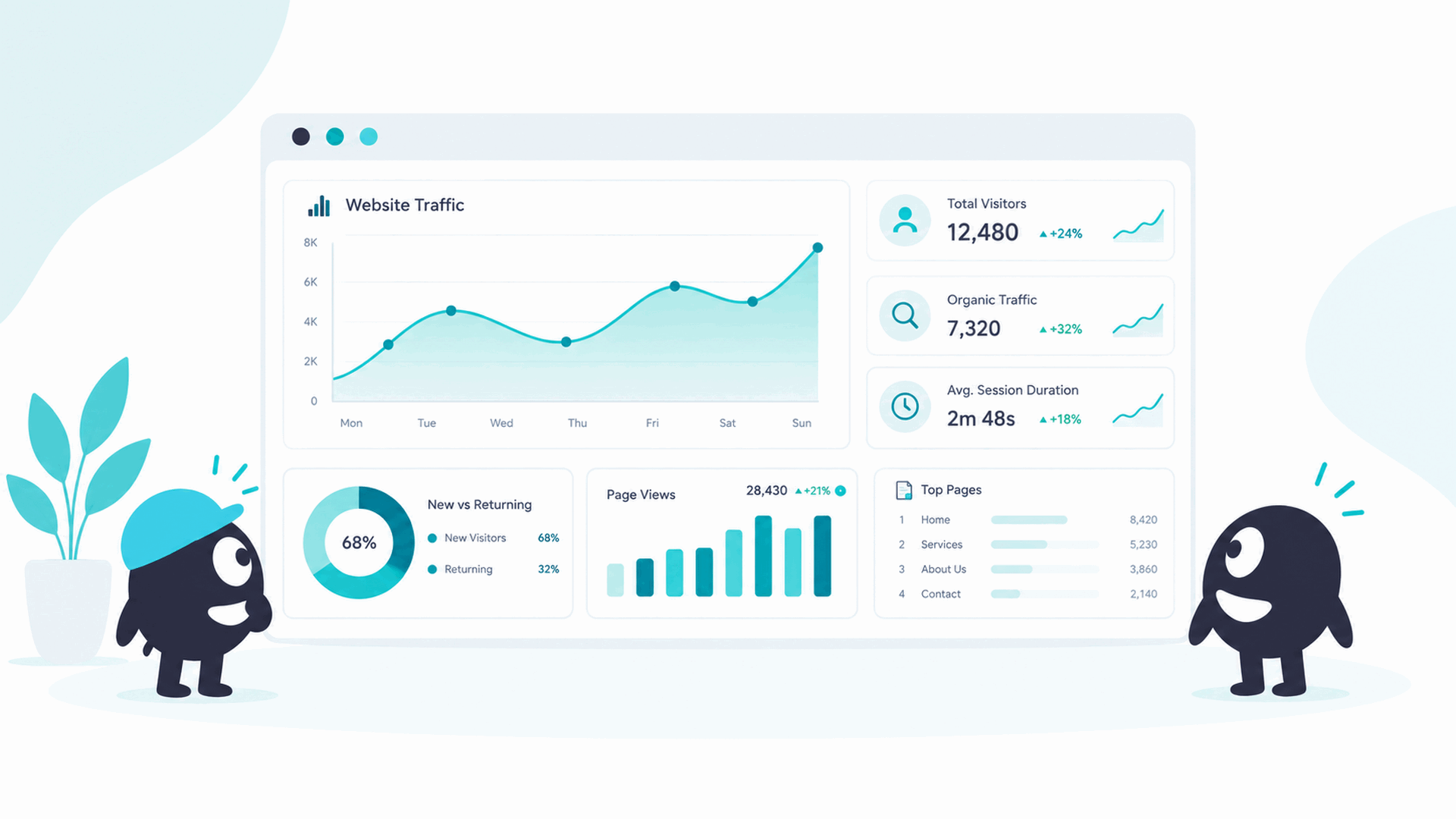
Here are six key metrics that can help you evaluate your website’s performance and identify areas for improvement.
1. Monitor Your Website Traffic
Start by reviewing your website traffic through Google Analytics 4 (GA4). Track how many users visit your website, which pages they view, and which channels bring them to your site.
You can also examine the days and times when traffic is highest to better understand your audience’s behavior.
An increase in website traffic is a positive sign, provided that your visitors are genuinely interested in your products or services.
2. Analyze Your Bounce Rate and User Engagement
The bounce rate is one of the metrics you can monitor in Google Analytics 4. It represents the percentage of sessions that were not engaged sessions, according to GA4’s criteria.
However, a high bounce rate does not necessarily mean that your website has poor design or content. For example, a visitor may find the information they need immediately and leave satisfied.
For this reason, evaluate your bounce rate alongside other metrics, such as engagement time, page views, and the actions visitors take on your website.
3. Check Your Organic Traffic and Search Engine Performance
Organic traffic comes from unpaid search results, such as those displayed by Google and Bing. It is an important indicator when evaluating the effectiveness of your SEO strategy.
With Google Search Console, you can monitor how often your website appears in search results, how many clicks it receives, which search queries bring visitors to your site, and its average search position.
Consistent growth in organic traffic can indicate that your SEO strategy is working. However, the real goal is to attract visitors who are searching for products, services, or information relevant to your business.
4. Measure Your Website Loading Speed
Website loading speed plays an important role in the user experience. A slow website can make browsing frustrating and encourage visitors to leave before the content loads.
Use tools such as Google PageSpeed Insights to evaluate your website’s performance on both mobile devices and desktop computers. Review the suggested improvements and pay particular attention to Core Web Vitals, which measure important aspects of the user experience.
Learn more in our article about website loading speed and why it matters.
5. Find and Fix Broken Links
Broken links can lead visitors to pages that no longer exist or display a 404 error. This creates a poor browsing experience and can make it more difficult for both users and search engines to access your content.
Regularly check the internal and external links on your website. If you find a problem, update the URL, replace the link, or implement an appropriate redirect where necessary.
Keeping your links functional helps create a smoother user experience and maintains a well-organized website structure.
6. Track Page Views and Conversions
The average number of page views per visit can provide useful insights into how visitors navigate your website.
If users explore multiple pages, they may be interested in your content or looking for more information about your products and services. However, page views alone do not determine success, as their significance depends on the purpose and structure of your website.
Equally important is tracking conversions. Depending on your business goals, conversions may include submitting a contact form, requesting a quote, making a phone call, or completing an online purchase.
Conversion tracking helps you understand whether your website is doing more than attracting visitors and is actually contributing to your business growth.
Review Your Website Performance Regularly
A successful website cannot be evaluated using just one metric. Its performance depends on a combination of traffic, search engine visibility, loading speed, user experience, and the results it delivers for your business.
We recommend monitoring your key metrics monthly and comparing them with previous periods. This will help you identify trends, evaluate your efforts, and plan targeted improvements.
At Stonewave, we design and develop websites with a focus on functionality, user experience, and the individual needs of each business.
Looking to build a website that stands out and supports your business goals?
Contact us at 2310 221500 or email us at [email protected] to discuss your needs.
